🔮 Black Friday Sale Nov 11 - 30



Best Crystals For Shadow Work






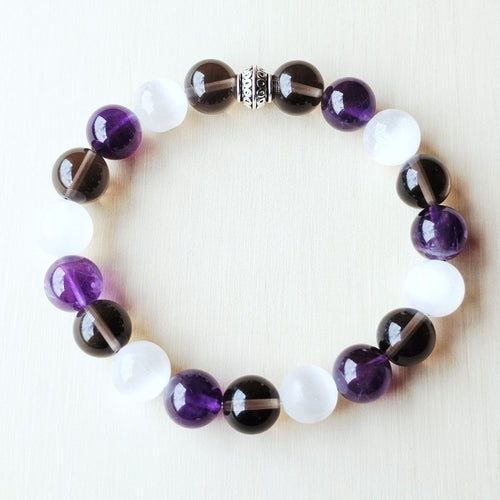

















Crystals for Shadow Work, Self-Reflection & Personal Growth
We all have parts of ourselves that we understand beautifully, and others that remain a little more complicated.
Perhaps it's a reaction that catches us by surprise, a familiar pattern we keep repeating or a feeling we struggle to explain. Sometimes we recognise these things immediately. Other times, they quietly influence our choices long before we become aware of them.
Shadow work is a practice of exploring these less familiar aspects of ourselves with curiosity, honesty and compassion.
Our Best Crystals for Shadow Work collection brings together natural minerals traditionally associated with self-reflection, grounding, intuition, emotional awareness and personal transformation.
Within spiritual practices, crystals can become meaningful companions for journalling, meditation and setting intentions as we explore our thoughts, beliefs and behaviours.
The purpose of shadow work isn't to find fault with who we are. It's to develop a fuller understanding of ourselves, including the experiences, habits and protective responses that have helped shape us.
And occasionally, to discover that the behaviour we've been blaming on everyone else might deserve a little closer inspection. Personal growth does have a sense of humour.
What Is Shadow Work?
The concept of the shadow is closely associated with Swiss psychiatrist Carl Jung, who used the term to describe aspects of personality that remain outside conscious awareness or that a person may find difficult to acknowledge.
These aspects can include uncomfortable emotions, fears, insecurities and behaviours, but they can also involve strengths, desires and qualities that have been discouraged or overlooked.
Modern shadow work draws inspiration from these ideas, although the term is now used across a broad range of spiritual and personal development practices.
Shadow work might involve reflecting on why certain situations trigger strong reactions, recognising repeated relationship patterns or questioning beliefs that no longer reflect who we are.
It can also involve acknowledging qualities we admire in others but struggle to recognise within ourselves.
The aim is greater self-awareness, rather than judging every thought or emotion that arises.
Within crystal traditions, particular minerals are associated with the qualities people may wish to explore during this process, including honesty, perspective, grounding and self-acceptance.
What Are the Best Crystals for Shadow Work?
Different crystals are traditionally associated with different aspects of self-exploration.
Some represent the courage to look honestly at recurring patterns, while others encourage perspective, intuitive reflection and remaining grounded in the present.
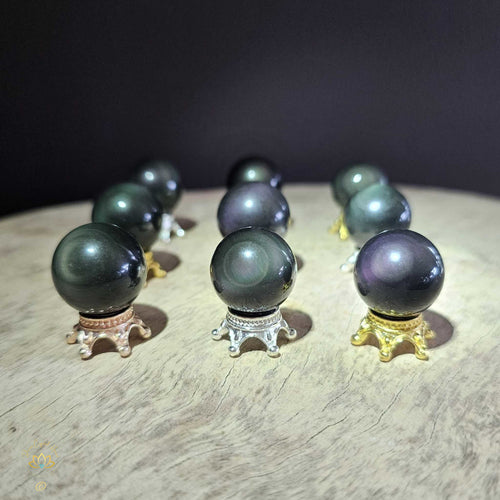
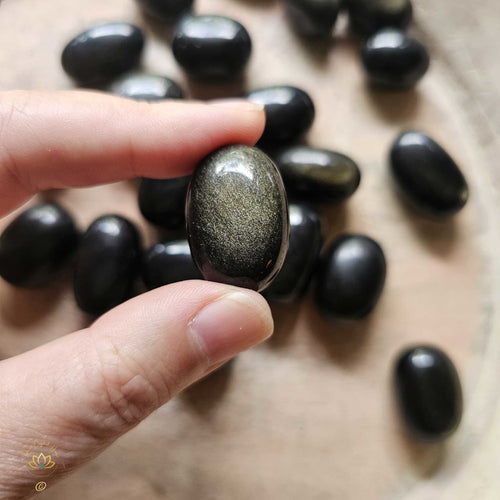
Gold Sheen Obsidian
Gold Sheen Obsidian is a variety of volcanic glass that forms when silica-rich lava cools rapidly, leaving insufficient time for an ordered crystal structure to develop.
Its remarkable golden sheen is an optical effect associated with microscopic gas bubbles and internal structures that reflect light within the glass.
Within modern crystal traditions, Gold Sheen Obsidian is associated with self-reflection, truth, personal insight and recognising patterns that may otherwise remain unnoticed.
It is often chosen when someone wants to examine their motivations, consider the reasons behind familiar behaviours or reflect on decisions they would like to approach differently.
Its golden reflections offer a particularly fitting visual connection to the idea of discovering something previously hidden beneath the surface.
Snowflake Obsidian
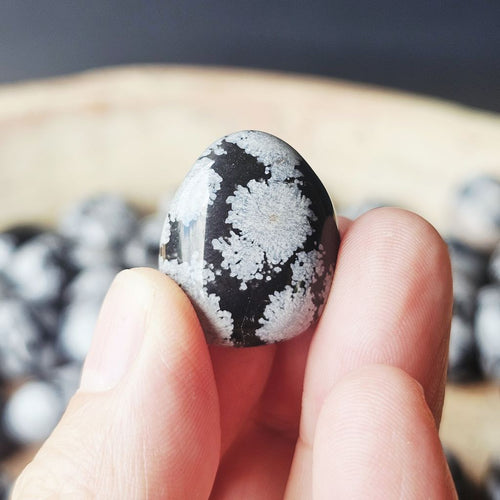
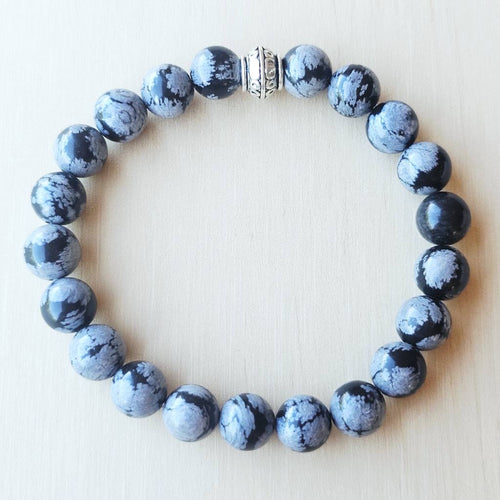
Snowflake Obsidian is another form of volcanic glass, distinguished by its contrasting black background and pale, snowflake-like patterns.
These markings are commonly formed by radiating clusters of cristobalite, a crystalline form of silica, that develop within the volcanic glass.
Within spiritual practices, Snowflake Obsidian is traditionally associated with balance, self-acceptance and perspective.
Its contrasting appearance beautifully reflects an important principle of shadow work: we can acknowledge different aspects of ourselves without needing to divide everything into good and bad.
Snowflake Obsidian may appeal when reflecting on personal imperfections, recognising emotional patterns or learning to approach ourselves with greater understanding.
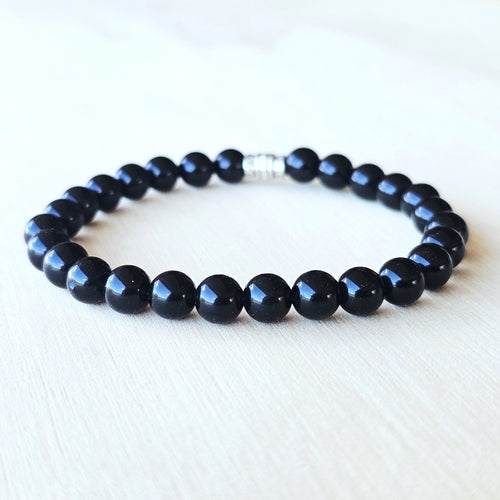
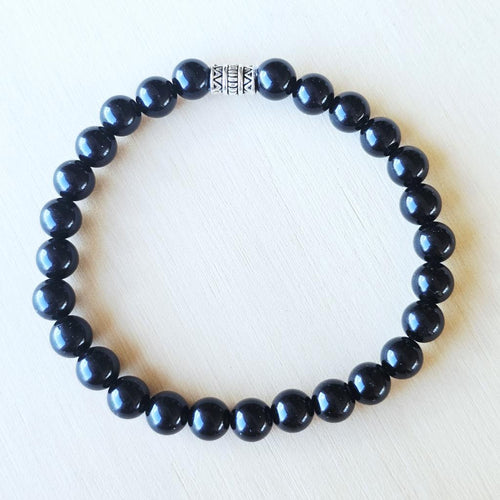
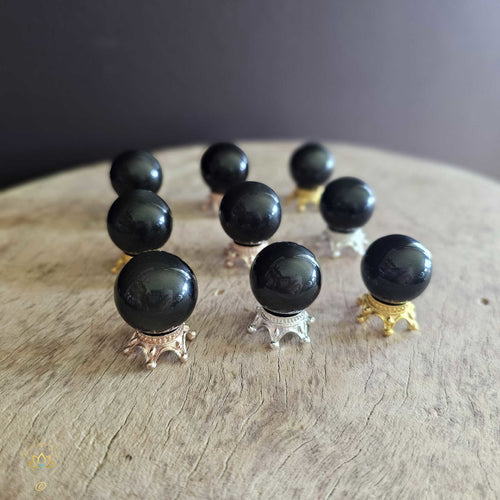
Obsidian
Obsidian is a naturally occurring volcanic glass, generally formed when silica-rich molten rock cools rapidly.
Its smooth, glassy appearance and conchoidal fracture distinguish it from minerals that develop an organised internal crystal structure.
Within crystal healing traditions, Obsidian is associated with truth-seeking, protection, grounding and deep reflection.
It is often chosen during practices involving honest self-examination, particularly when exploring feelings, behaviours or beliefs that have been difficult to acknowledge.
Obsidian encourages a thoughtful approach to understanding ourselves, where awareness becomes an opportunity for change rather than criticism.
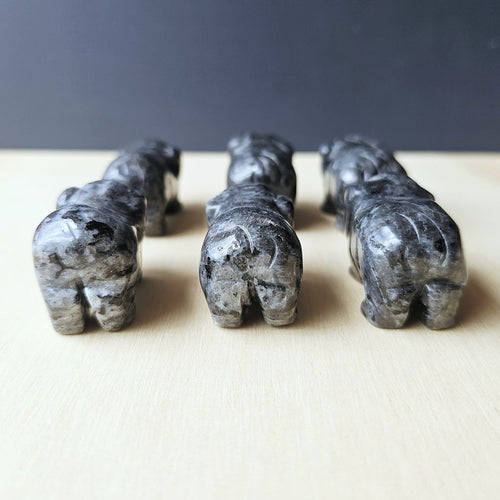
Larvikite
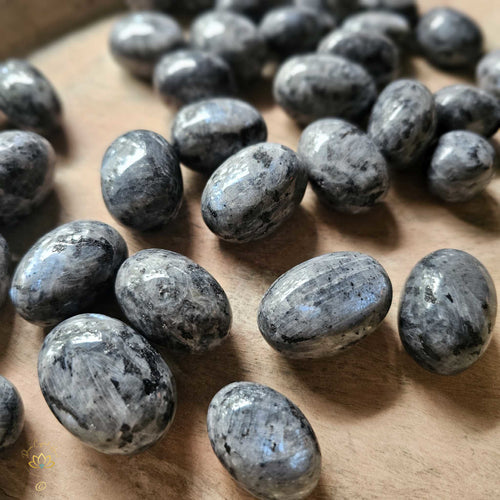
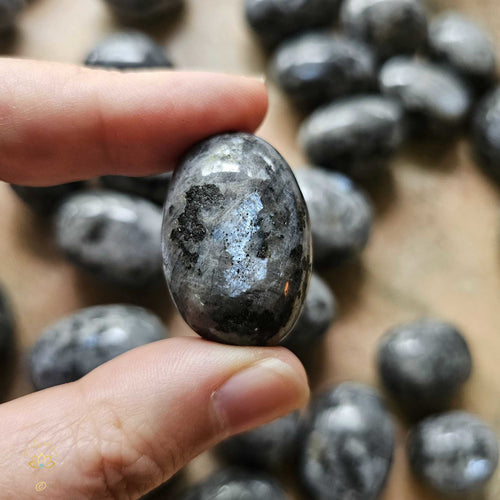
Larvikite is a distinctive igneous rock from Norway, composed predominantly of feldspar minerals.
Its beautiful silvery-blue optical flashes result from light interacting with microscopic structures within its feldspar crystals.
Within contemporary crystal practices, Larvikite is associated with grounding, perspective, intuition and present-moment awareness.
It offers an important reminder during shadow work: understanding the past can be valuable, but we still need to remain connected to the present.
Larvikite may be particularly meaningful when reflection becomes repetitive or when someone wants to consider past experiences without allowing them to dominate their current perspective.
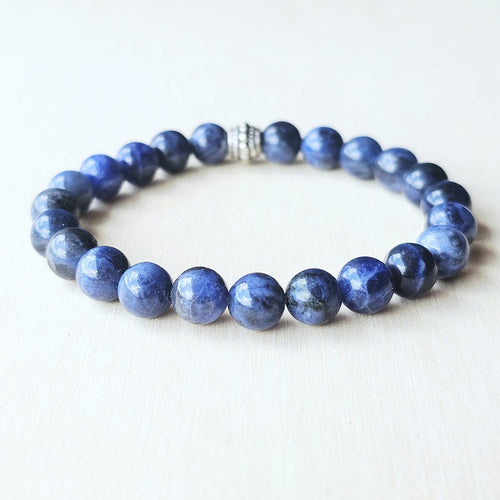
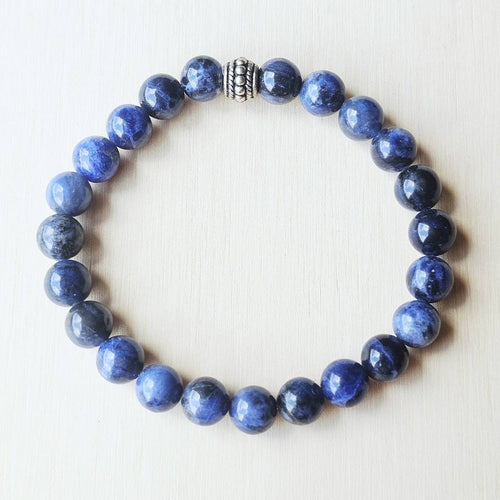
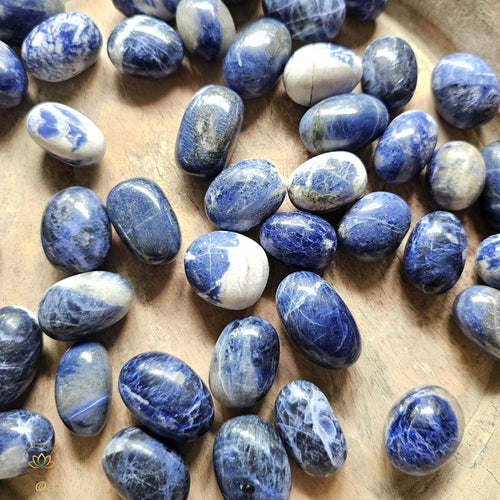
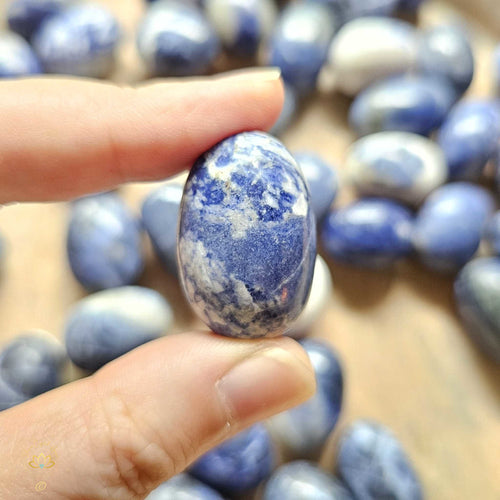
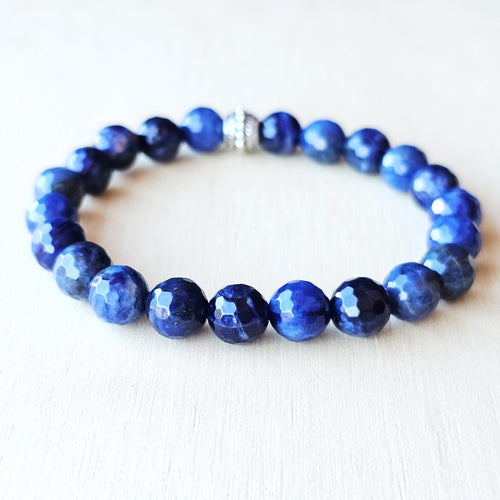
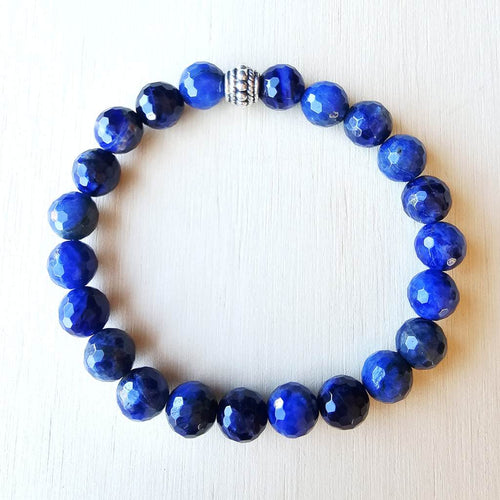
Sodalite
Sodalite is a sodium aluminium silicate chloride mineral, commonly recognised by its rich blue colouring and contrasting white mineral veining.
It belongs to the feldspathoid mineral group and is frequently found in silica-poor igneous rocks.
Within spiritual traditions, Sodalite is associated with self-honesty, thoughtful expression, clarity and understanding.
It is often chosen when someone wants to explore their thoughts more carefully or find the words for feelings they have struggled to express.
Sodalite may appeal during journalling, conversations requiring honesty or periods when greater understanding comes from questioning long-held assumptions.
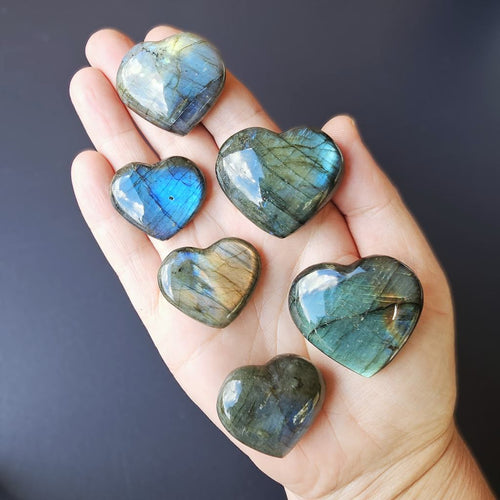
Labradorite
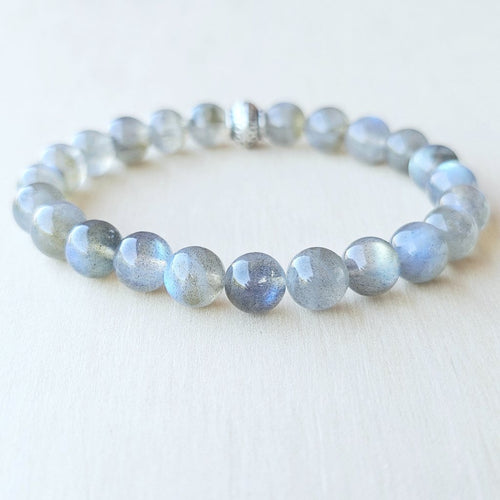
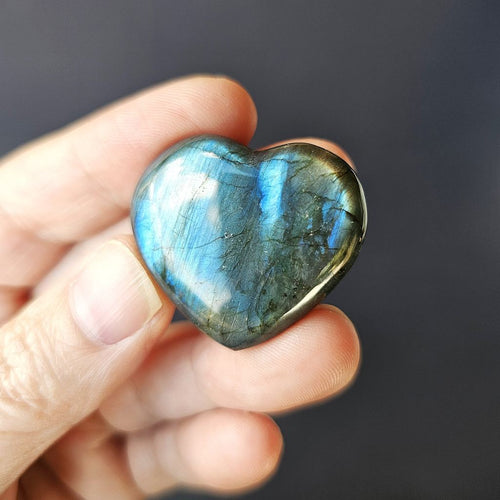
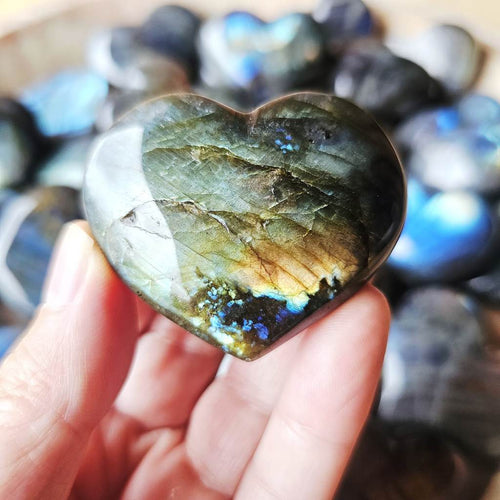
Labradorite is a feldspar mineral admired for its remarkable optical effect known as labradorescence.
This phenomenon creates flashes of blue, green, gold and other colours as light interacts with microscopic layers within the mineral.
Within crystal healing traditions, Labradorite is associated with intuition, exploration, personal transformation and discovering unfamiliar aspects of ourselves.
It is often chosen when someone is questioning old identities, exploring changing priorities or becoming more aware of qualities they have previously overlooked.
Labradorite represents the possibility that self-discovery can reveal strengths and opportunities as well as challenges.
After all, shadow work should leave room for a few pleasant surprises.
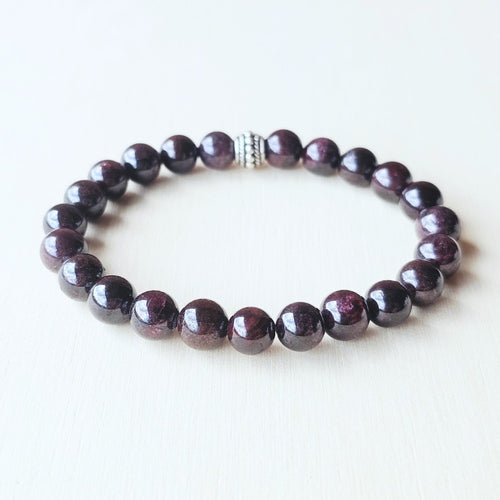
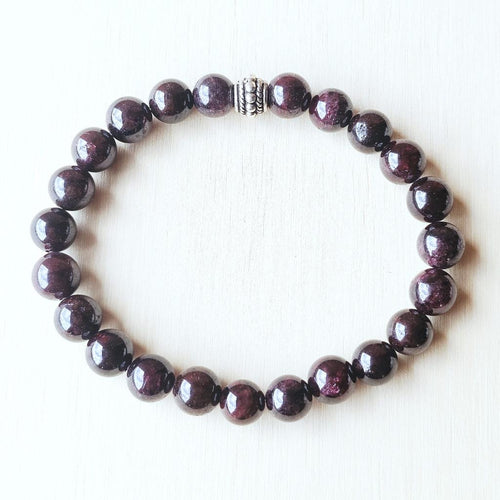
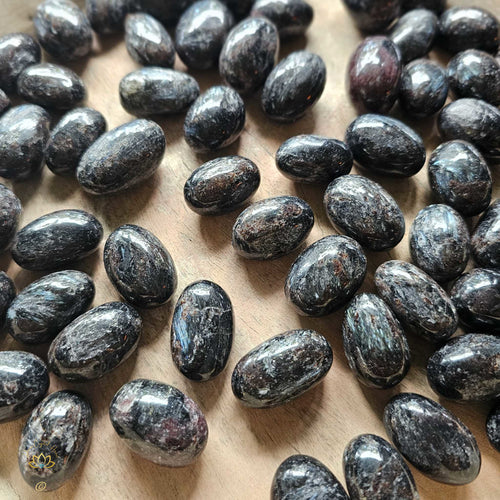
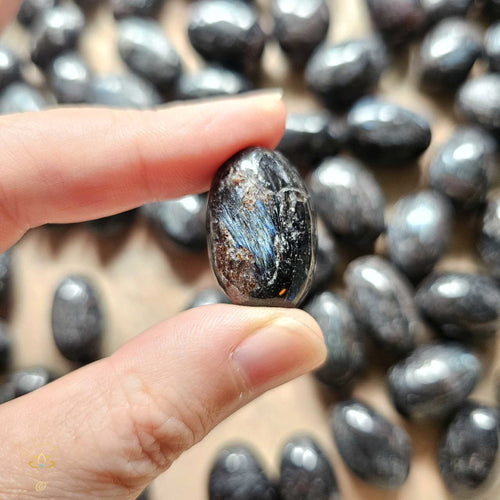
Garnet
Garnet belongs to a group of closely related silicate minerals, with varieties that can display deep red, orange, green, pink and other colours.
Within spiritual traditions, Garnet is associated with inner strength, commitment, personal resolve and remaining connected to our values.
It represents the forward-looking aspect of shadow work.
Understanding a recurring pattern can be valuable, but deciding what to do with that understanding is equally important.
Garnet may appeal when someone is considering new boundaries, developing healthier habits or committing to choices that better reflect the person they wish to become.
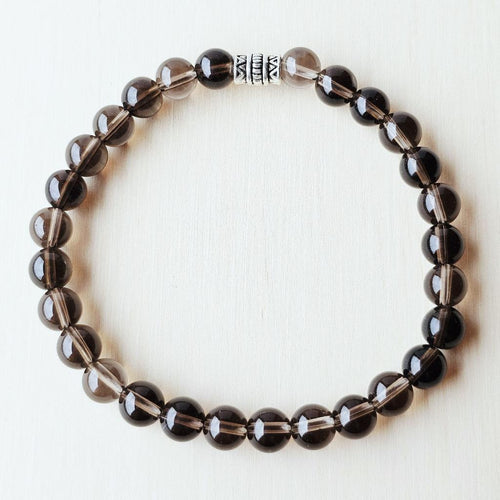
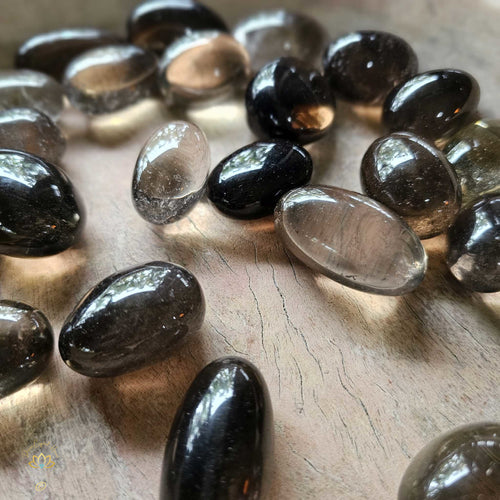
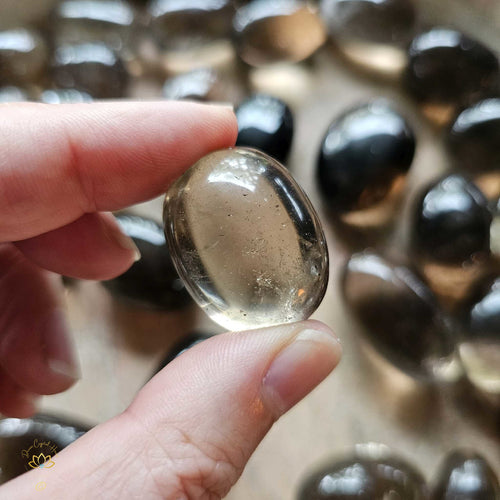
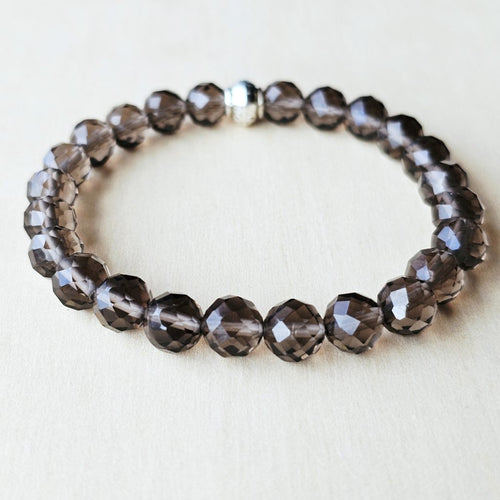
Smoky Quartz
Smoky Quartz is a variety of crystalline Quartz, with its characteristic smoky colouring developing through natural irradiation acting on aluminium-related defects within its crystal structure.
It belongs to the trigonal crystal system and can range from lightly smoky grey to deep brown.
Within modern crystal traditions, Smoky Quartz is strongly associated with grounding, stability, emotional release and returning to the present moment.
It is often chosen towards the end of a reflective practice, particularly when someone wants to acknowledge what they have explored and then redirect their attention towards everyday life.
Smoky Quartz represents an important part of self-awareness: knowing when to reflect and when to give yourself permission to move forward.
Shadow Work Is About Understanding, Not Judgement
One of the most important aspects of shadow work is recognising the difference between understanding a behaviour and criticising yourself for having it.
Many of our reactions develop through experiences, learned expectations and attempts to protect ourselves from discomfort.
A response that once felt necessary may no longer be helpful in our present circumstances.
Shadow work invites us to explore these patterns with curiosity.
You might ask yourself why a particular situation creates a strong emotional response, what assumptions you are making or whether a familiar reaction reflects what you genuinely believe today.
Sometimes this process reveals something you would like to change.
Other times, it helps you recognise that a part of yourself deserves more understanding than you have previously allowed.
Within spiritual practices, Snowflake Obsidian is associated with acceptance, Sodalite with honest reflection and Labradorite with recognising new possibilities.
Together, these associations encourage an approach to personal growth that makes room for both accountability and compassion.
Choosing Crystals for Shadow Work
The best crystal for shadow work will depend on the kind of reflection you wish to explore.
Gold Sheen Obsidian may appeal when examining recurring patterns, motivations and personal choices.
Snowflake Obsidian is traditionally associated with balance and accepting different aspects of ourselves, while Obsidian represents truth-seeking and grounded reflection.
Sodalite may be particularly meaningful when journalling or trying to express feelings that have previously been difficult to explain.
Labradorite is often chosen during periods of personal transformation, particularly when someone is exploring unfamiliar qualities or changing beliefs.
Garnet represents commitment and the strength to act upon new understanding.
Larvikite and Smoky Quartz bring grounding associations to the collection, encouraging reflection without losing connection with the present.
You may feel drawn to one particular crystal or prefer working with several stones that represent different stages of your personal exploration.
How to Use Crystals for Shadow Work
Shadow work can be explored through journalling, meditation, quiet reflection and thoughtful conversations.
Crystals can provide a physical focus for these practices, helping you connect a particular intention with a meaningful object.
Begin by choosing a crystal that reflects the quality you wish to explore.
You might hold Gold Sheen Obsidian while considering a recurring pattern, keep Sodalite beside your journal when writing about difficult feelings or choose Snowflake Obsidian when practising self-acceptance.
Rather than trying to uncover everything at once, begin with one manageable question.
You could reflect on a recent reaction, a belief you have been questioning or a situation in which you would like to respond differently.
Notice what comes to mind without immediately deciding whether your thoughts are right or wrong.
When you finish, take a moment to reconnect with your surroundings. Holding Larvikite or Smoky Quartz can become a meaningful reminder to return your attention to the present.
Shadow work does not need to become an endless investigation into every decision you've made since childhood.
A little curiosity, a little compassion and a willingness to consider a different perspective can be a valuable place to begin.
If reflection brings up overwhelming emotions or distressing memories, it is sensible to pause and seek support from a qualified mental health professional. Deep emotional work deserves appropriate care.
Deep Dive Into Shadow Work Kit
For those who would like to explore several complementary crystals together, our Deep Dive Into Shadow Work Kit brings together eight carefully selected pieces traditionally associated with self-reflection, personal insight, grounding and transformation.
Gold Sheen Obsidian represents truth-seeking and recognising recurring patterns, while Snowflake Obsidian is associated with balance, perspective and self-acceptance.
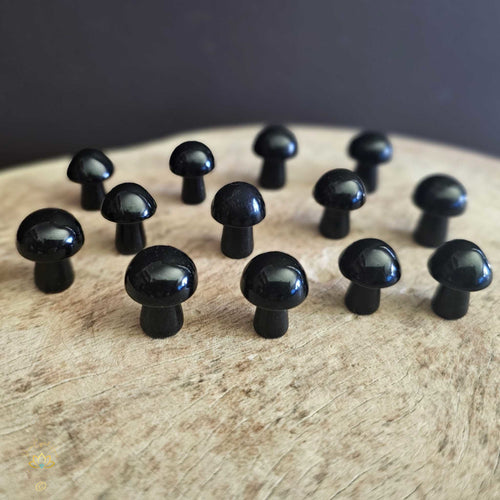
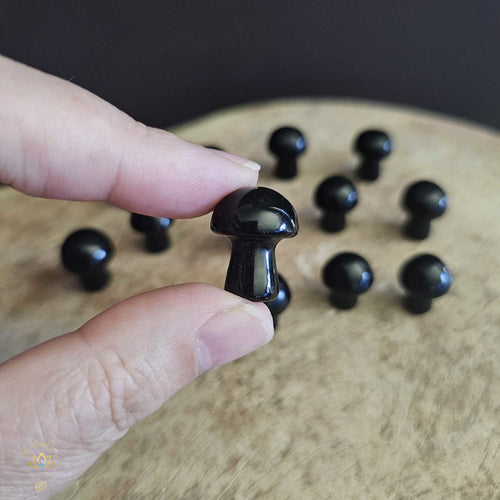
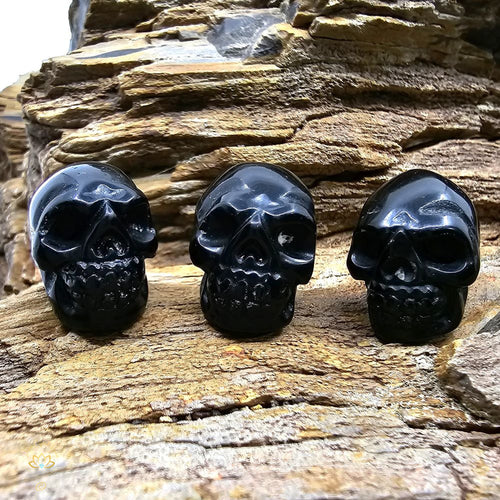
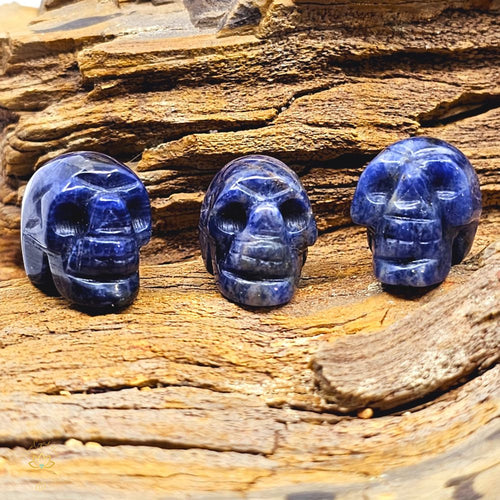
The Obsidian Mini Guardian introduces a particularly meaningful element to the collection. Carved into a little skull, it represents protection, reflection and the courage to look honestly at the parts of ourselves we may not fully understand. A small guardian to watch over your journey.
Larvikite brings its grounding associations and encourages present-moment awareness, while Sodalite represents self-honesty, thoughtful expression and understanding.
Labradorite is traditionally associated with intuition, exploration and transformation, inviting curiosity about the person you may be becoming.
Garnet represents inner strength, commitment and staying connected to your values as your understanding develops.
Smoky Quartz completes the collection with its associations of grounding, stability and symbolic release, offering a meaningful focus for finishing a period of reflection and returning to everyday life.
Together, these eight pieces offer different perspectives on self-exploration, from recognising familiar patterns to considering new choices and developing a more compassionate understanding of yourself.
Making Peace With the Parts of Yourself You're Still Discovering
Personal growth rarely follows a perfectly straight line.
There may be moments of clarity, periods of uncertainty and occasions when something you thought you had understood presents itself from an entirely different perspective.
Shadow work invites us to remain curious throughout that process.
It encourages us to recognise that our experiences, emotions and behaviours are often more complicated than they first appear.
Within spiritual practices, crystals can become meaningful reminders of the intentions we bring to this exploration.
Their geological origins, natural formations and traditional associations offer different ways to appreciate them, while the personal significance we attach to them can develop through our own experiences.
Ultimately, shadow work is about developing a fuller understanding of who we are, recognising what we would like to change and making room for the qualities we are still discovering.
Sometimes the most meaningful transformation begins with being willing to see ourselves a little differently.
Crystals for Shadow Work FAQs
What Is the Best Crystal for Shadow Work?
Obsidian is one of the most recognised stones traditionally associated with shadow work, particularly Gold Sheen Obsidian and Snowflake Obsidian.
Gold Sheen Obsidian is associated with self-reflection and personal insight, while Snowflake Obsidian represents balance, perspective and self-acceptance.
Labradorite, Sodalite and Smoky Quartz are also popular choices for different aspects of personal exploration.
What Is the Difference Between Shadow Work and Inner Child Work?
Shadow work generally involves exploring aspects of ourselves that may be outside conscious awareness, including recurring behaviours, beliefs and emotional responses.
Inner child work focuses more specifically on reflecting upon childhood experiences, emotional needs and the ways early experiences may influence adult life.
The two approaches can overlap, but they are not identical.
Why Is Obsidian Associated With Shadow Work?
Within modern crystal traditions, Obsidian is associated with truth, protection, grounding and self-examination.
Its dark, reflective appearance has also contributed to its spiritual connection with exploring hidden or unfamiliar aspects of ourselves.
These associations are part of crystal traditions rather than scientifically established psychological effects.
What Crystal Is Good for Self-Reflection?
Sodalite, Gold Sheen Obsidian and Labradorite are traditionally associated with different aspects of self-reflection.
Sodalite represents thoughtful understanding and honest expression, Gold Sheen Obsidian is connected with recognising patterns, and Labradorite is associated with personal exploration and transformation.
Can I Use Crystals While Journalling?
Yes. Many people enjoy keeping crystals nearby while journalling or reflecting on personal intentions.
You might choose Sodalite when exploring thoughts and feelings, Snowflake Obsidian when reflecting on self-acceptance or Smoky Quartz when finishing a reflective session.
The crystal can become a meaningful focal point for the practice.
Is Shadow Work Always About Difficult Emotions?
No. Although shadow work can involve uncomfortable feelings or behaviours, it may also reveal overlooked strengths, creative qualities, personal needs and aspirations.
The aim is greater self-awareness rather than concentrating exclusively on negative experiences.
How Do I Stay Grounded During Shadow Work?
Begin with manageable questions, allow yourself to pause and avoid forcing difficult memories or emotions to surface.
You may find it helpful to notice your surroundings, take comfortable breaths, journal briefly or return to an everyday activity after reflection.
Larvikite and Smoky Quartz are traditionally associated with grounding and can serve as personal reminders to reconnect with the present moment.
If the process becomes distressing, consider seeking guidance from a qualified mental health professional.